

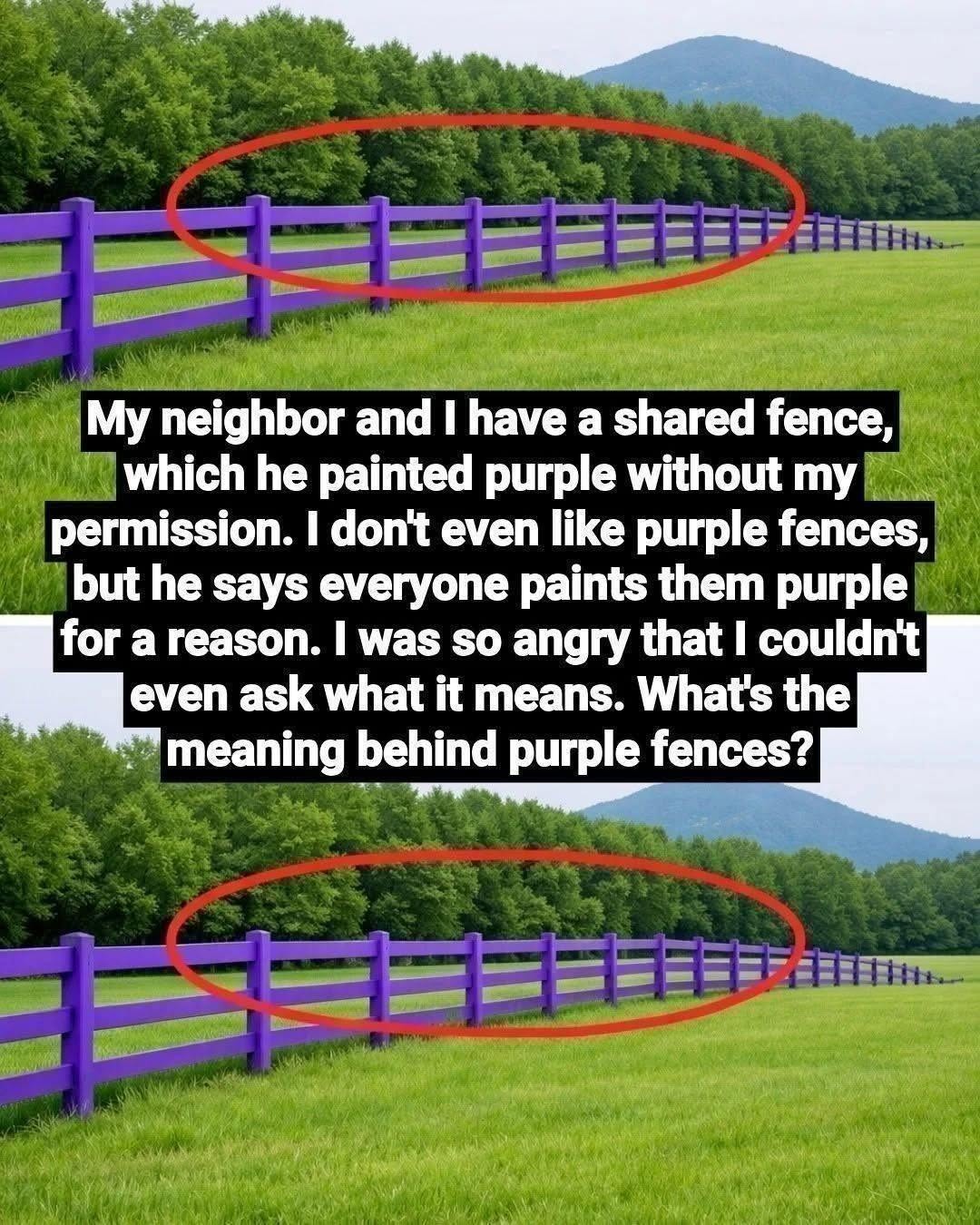
In many U.S. states—particularly across the South, Midwest, and rural West—purple paint on trees, fence posts, or rocks isn’t decorative. It’s a legal “No Trespassing” sign.
This practice, known as the “Purple Paint Law,” is officially recognized in at least 18 states, including Texas, Arkansas, Missouri, North Carolina, Illinois, and Florida. The idea is simple: in large, remote properties (like farms, ranches, or timberland), it’s impractical to post traditional “No Trespassing” signs every few hundred feet. Instead, landowners use vertical purple paint marks as a durable, weather-resistant alternative. CommissionCustom Prints
⚖️ How It Works (Legally)
While exact rules vary by state, most follow these guidelines:
Paint marks must be vertical (not horizontal or splattered)
Length: Typically 8–12 inches long
Height: 3–5 feet off the ground
Spacing: Marks placed every 100–1000 feet along the boundary (depending on state law)
Color: Must be purple (specifically “blaze purple”—a shade visible in most lighting conditions)
📌 Example: In Texas, under Penal Code §30.06, purple paint marks carry the same legal weight as a “No Trespassing” sign
Patio, Lawn & Garden
❓ Why Purple?
see continuation on next page
Great question! Several practical reasons:
Highly visible year-round—even in snow, mud, or dense foliage
Uncommon in nature, so it stands out (unlike red, which could be rust or clay)
Not used for other property markings (blue = pipeline, orange = survey, etc.)
Long-lasting paint resists fading better than many colors
🚫 Does It Apply Everywhere?
No. If you’re in a state without a purple paint law (like California, New York, or most of New England), purple markings have no legal standing. Always check your local statutes. CommissionCustom Prints
But in states where it is law—ignorance isn’t a defense. Hunters, hikers, and even drone operators have been cited for trespassing based solely on purple paint.
❤️ The Bigger Picture
This tradition reflects a deep respect for private property rights in rural America—and a smart, low-cost solution for landowners managing thousands of acres. It’s quiet, effective, and deeply rooted in practicality.
“In the country, the land speaks in colors. Purple doesn’t mean ‘pretty’—it means ‘private.’” 🟣
So next time you see a purple fence post or tree stripe in a rural area, now you know: it’s not a design choice. It’s a boundary, a warning, and the law—all in one bold stroke. Fencing