

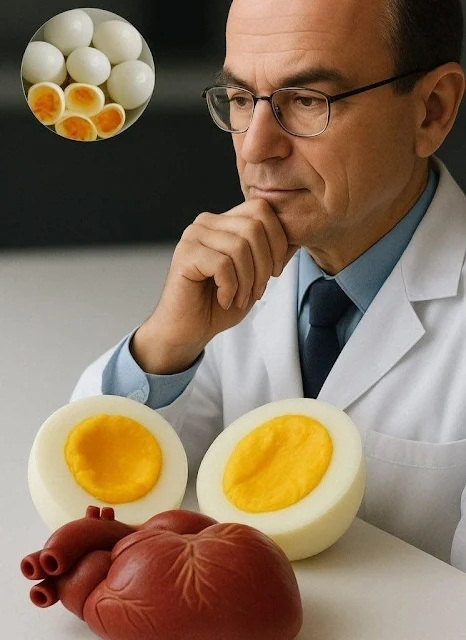
For years, eggs were surrounded by controversy. Because egg yolks contain cholesterol, many people were told to limit them or avoid them altogether, especially if they were concerned about heart disease.
But nutrition research has become more nuanced.
So, if you enjoy eating boiled eggs for breakfast, should you be worried about your heart?
For most healthy people, the answer is reassuring: an egg a day can fit into a heart-healthy diet. What matters is not simply whether you eat an egg, but what the rest of your diet looks like and what you eat alongside it.
Why Are Eggs Associated With Cholesterol?
The concern comes mainly from the egg yolk.
A large egg contains roughly 200 milligrams of dietary cholesterol, which once led experts to assume that eating eggs would significantly raise cholesterol levels in the blood and, consequently, increase the risk of cardiovascular disease.
We now understand that the relationship is more complicated.
The body produces much of its own cholesterol in the liver, and dietary cholesterol generally has a smaller effect on blood cholesterol than was once believed. Saturated and trans fats are particularly important dietary factors when it comes to raising LDL cholesterol, the type associated with artery-clogging plaque.
That doesn’t mean dietary cholesterol is irrelevant for everyone. Individual responses can vary, and people with certain health conditions may need more personalized dietary advice.
What Makes a Boiled Egg a Nutritious Breakfast?
A boiled egg is relatively simple, but nutritionally it packs quite a lot into a small package.
One large egg provides approximately 6 grams of high-quality protein and around 70 calories. It also contains nutrients including vitamin A, vitamin D, B vitamins, choline, phosphorus, and antioxidants such as lutein and zeaxanthin.
Protein can also help you feel satisfied after breakfast. This can be useful if you’re trying to avoid constantly reaching for snacks later in the morning.
And because boiling doesn’t require butter or large amounts of cooking oil, boiled eggs can be an especially straightforward way to include eggs in a balanced breakfast.
Is Eating an Egg Every Morning Bad for Your Heart?
For most healthy adults, current evidence does not suggest that eating approximately one egg per day substantially increases the risk of heart attack or stroke.
Harvard Health notes that large observational studies have generally found no increased cardiovascular risk among healthy people consuming up to about one egg per day. The American Heart Association has similarly stated that healthy individuals can include up to one whole egg per day as part of an overall healthy dietary pattern.
However, nutrition is rarely as simple as labeling one food “good” or “bad.”
The overall pattern matters much more.
What You Eat With Your Eggs May Matter More
Imagine two different breakfasts.
The first consists of a boiled egg, oatmeal, berries, and a handful of nuts.
The second consists of eggs with bacon, sausage, buttered toast, and processed cheese.
Both meals contain eggs, but they are very different from a cardiovascular perspective.
Foods such as bacon, sausage, butter, and many full-fat processed foods can contribute significant amounts of saturated fat and sodium. These additions may matter more for cardiovascular health than the cholesterol naturally present in the egg itself.
This is why simply removing eggs from your breakfast may not solve a cholesterol problem if the rest of the diet remains high in saturated fat.
Why Boiled Eggs Can Be a Smart Choice
The cooking method also matters.
Boiling an egg doesn’t require adding butter or large amounts of oil. That makes it easy to keep the meal relatively simple.
A boiled egg can be combined with:
Whole-grain toast
Oatmeal
Fresh fruit
Tomatoes
Spinach
Avocado
Other vegetables
Unsalted nuts or seeds
This creates a breakfast that provides protein alongside fiber, healthy fats, vitamins, and minerals.
The goal isn’t to make eggs the entire meal. The goal is to make them one part of a balanced meal.
What About People With High Cholesterol?
This is where individual circumstances become important.
If you already have high LDL cholesterol, cardiovascular disease, diabetes, or another condition that affects your cardiovascular risk, you shouldn’t assume that advice designed for healthy adults automatically applies to you.
Some people may respond differently to dietary cholesterol than others, and dietary recommendations may need to be personalized.
Rather than eliminating eggs automatically, it can be more useful to look at your entire diet and identify the major sources of saturated fat, processed foods, and excess calories.
If you have a diagnosed cholesterol problem, ask your doctor or a registered dietitian how eggs fit into your particular diet.
Does Eating Eggs Raise LDL Cholesterol?
The answer isn’t simply “yes” or “no.”
Eggs do contain cholesterol, and in some individuals dietary cholesterol can influence blood cholesterol levels. But research suggests that the effect of dietary cholesterol is generally smaller than the effect of the overall fat composition of the diet, particularly saturated fat.
Interestingly, a 2025 clinical trial summarized by Harvard Health found that a diet containing two eggs per day did not raise LDL cholesterol compared with a control diet when the overall diet was low in saturated fat. The study was relatively small and short, so it shouldn’t be interpreted as proof that everyone should eat two eggs every day.
The broader lesson is more useful: don’t judge a food solely by one nutrient.
What About Egg Whites?
Egg whites contain protein but no cholesterol because the cholesterol is concentrated in the yolk.
For people who need to reduce dietary cholesterol while still wanting the protein provided by eggs, incorporating more egg whites can be one option.
However, the yolk also contains many of the egg’s valuable nutrients, including choline, vitamin A, vitamin D, lutein, and zeaxanthin. So avoiding the yolk isn’t automatically necessary for everyone.
The appropriate choice depends on your individual nutritional needs and health status.
How Many Eggs Should You Eat?
There isn’t one universal number that applies to every person.
For generally healthy people, major medical and nutrition sources commonly consider about one whole egg per day compatible with a heart-healthy dietary pattern.
But eating habits shouldn’t be reduced to a single number.
Someone who eats one egg alongside vegetables, whole grains, fruit, nuts, and other minimally processed foods has a very different overall diet from someone who eats several eggs every day alongside large amounts of bacon, sausage, butter, and refined carbohydrates.
Your overall eating pattern matters.
A Heart-Friendly Egg Breakfast
If you want to make your morning eggs more heart-friendly, consider building your breakfast around several food groups.
For example:
1 boiled egg + whole-grain toast + tomatoes + fruit
Or:
2 eggs + spinach + oatmeal + berries
Another option is:
1 boiled egg + avocado + whole-grain bread + fresh vegetables
These combinations provide more than protein. They can also add fiber, vitamins, minerals, and healthier sources of fat.
Don’t Forget Fiber
One thing eggs don’t provide much of is dietary fiber.
Fiber is important for digestive health and can also be part of a dietary pattern that supports healthy cholesterol levels.
That’s why pairing eggs with foods such as oats, beans, vegetables, fruit, and whole grains can make a more balanced meal than eating eggs alone.
A breakfast doesn’t have to be complicated to be nutritious.
What Doctors Actually Want You to Focus On
The biggest mistake is looking at one food in isolation.
Heart health is influenced by many factors, including:
Blood pressure
LDL cholesterol
Physical activity
Smoking
Body weight
Sleep
Diabetes
Family history
Overall dietary pattern
Saturated and trans fat intake
An egg cannot compensate for an otherwise unhealthy lifestyle, but neither does eating an egg automatically make a healthy diet unhealthy.
The bigger picture matters.
The Bottom Line
So, is eating a boiled egg in the morning bad for your heart?
For most healthy people, not necessarily.
An egg can be a nutritious source of high-quality protein, vitamins, minerals, and other beneficial nutrients. Current evidence suggests that moderate egg consumption can fit comfortably within a heart-healthy diet for many people.
The more important question is what surrounds the egg.
A boiled egg served with vegetables, fruit, oats, or whole grains is very different from eggs accompanied by bacon, sausage, butter, and highly processed foods.
And if you already have high cholesterol, diabetes, cardiovascular disease, or another condition that affects your heart health, it’s worth discussing your individual egg intake with a healthcare professional.
The takeaway is simple: you don’t necessarily need to fear the egg yolk. Instead, focus on the quality of your entire diet.