
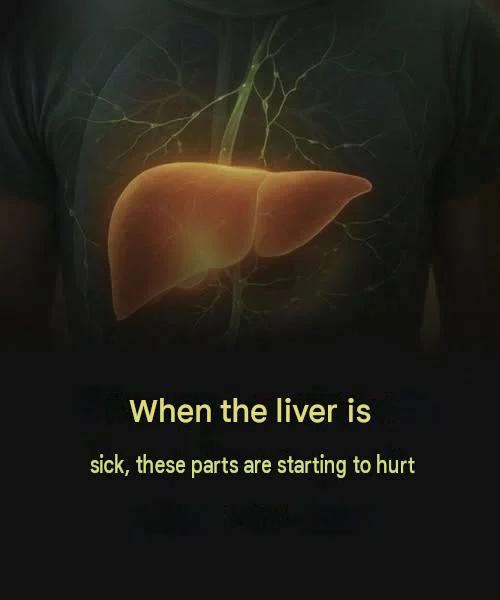
The liver is one of the most important organs in the body, responsible for detoxification, digestion, and many other vital processes. Because the liver itself does not contain pain-sensing nerve endings, problems often only become noticeable when they affect surrounding areas or other parts of the body.
Where can pain occur in cases of liver problems?
- Right upper abdominal area
The most common location is the area under the right lower breastbone, where the liver is located. Pain or pressure here often occurs when the liver enlarges and stretches the capsule around it, which actually contains pain-sensing nerves.
- Right shoulder blade and back
Pain related to liver problems often radiates under the right shoulder blade or into the upper back – this is called radiating pain, which can make it difficult to identify the exact source of the problem.
- Right shoulder
Less commonly, the pain may radiate to the right shoulder, especially if the diaphragm is also affected by the enlarged liver.
- Bloating and pressure in the abdomen
Abdominal bloating, a feeling of tension, or an early feeling of fullness after eating may also indicate that liver function is impaired.
Other warning signs to watch out for
Yellowing of the skin or whites of the eyes (jaundice)
Persistent fatigue and weakness
Loss of appetite and nausea
Dark-colored urine or light-colored stools
Itchy skin, for no apparent reason
What is worth doing?
If you experience any of these symptoms, especially if they occur together, it is important to see a doctor for an evaluation. A simple blood test (liver function test) is often enough to determine if you have a liver problem.
Summary
Since the liver is a “silent” organ, pain often only appears when the problem is more advanced. Therefore, it is important to pay attention to your body’s signals and not ignore persistent or recurring symptoms.