
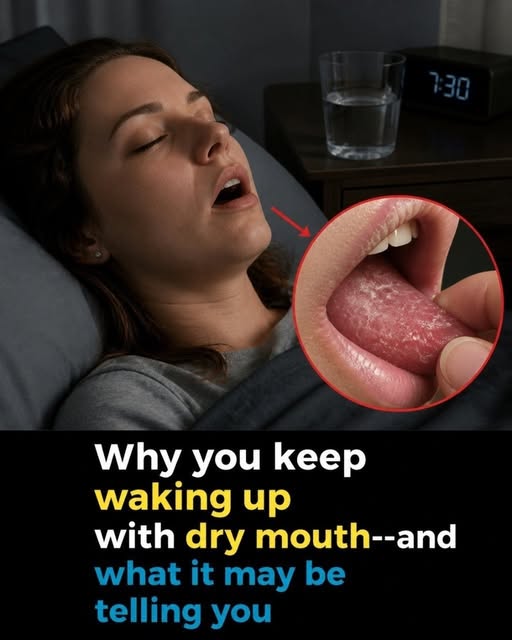
Waking up with dry mouth? Here’s what your body might be telling you

    • mouth.
    • Snoring or  Sleep Apnea: Breathing issues during  sleep, like snoring or sleep apnea, can cause mouth breathing, leading to dryness.


Common Medications That Cause Dry Mouth 


Medication Category Common Examples Why It Causes Dryness
Antihistamines Cetirizine, Chlorpheniramine, Loratadine Block histamine receptors that stimulate saliva
Decongestants Pseudoephedrine, Phenylephrine Reduce secretions including saliva
Antidepressants (TCAs, SSRIs) Amitriptyline, Fluoxetine, Sertraline Anticholinergic effects suppress salivary glands
Antipsychotics Olanzapine, Clozapine, Haloperidol Strong anticholinergic activity
Blood Pressure Medications Amlodipine, Atenolol, Hydrochlorothiazide Diuretic effect leads to dehydration
Diuretics Furosemide, Spironolactone Increase fluid loss, reducing saliva
Muscle Relaxants Cyclobenzaprine, Baclofen Anticholinergic side effects
Bladder Medications Oxybutynin, Solifenacin Specifically designed to reduce secretions
Parkinson’s Medications Trihexyphenidyl, Benztropine High anticholinergic activity

Important: If you take any of these medications and experience dry mouth, do not stop your medication without medical advice. Speak to your prescribing doctor about possible alternatives or dosage adjustments. Your dentist can help manage the oral health consequences.

Health Conditions

Dry Mouth at Night
Many people experience dryness of mouth specifically during sleep or upon waking, and the nighttime environment has its own set of triggers distinct from daytime dryness.


Mouth Breathing: When you breathe through your mouth instead of your nose during sleep, air flows directly over


the soft tissues of the oral cavity, rapidly evaporating the moisture that saliva provides. Mouth breathing is one of the most frequent dry tongue reasons reported by patients, and it bypasses the natural humidifying function of the nasal passage. It can become habitual or may be triggered temporarily by a blocked nose.
Nasal Blockage and Congestion: A blocked or congested nose – due to allergies, sinusitis, a deviated septum, or seasonal colds – forces automatic mouth breathing during sleep. Once nasal congestion clears, the dryness of the tongue and mouth often resolves on its own. However, structural issues like a deviated septum may require evaluation by an ENT specialist.
Snoring: Snoring causes the mouth to remain partially open throughout the night, accelerating oral drying. It also disturbs the natural breathing rhythm, further reducing saliva circulation in the oral cavity. Addressing snoring – through positional changes, weight management, or medical evaluation – often reduces causes of mouth dryness at night.
Sleep Apnea: Obstructive sleep apnea (OSA) is a condition in which the airway is repeatedly blocked during sleep, causing the person to unconsciously gasp and breathe through their mouth. Research indicates that over 30% of people with OSA experience morning dry mouth, compared to approximately

Leave a Reply

Your email address will not be published. Required fields are marked *